


When my late partner Anne and I moved into a house on a rural road in southcentral Michigan, we knew it was haunted—or at least we were told it was. The people who built it never got to live there. No one had. This one-story three-bedroom house erected in the middle of eighty acres of corn had sat empty for three long years after it was built. The lawn was mowed, but otherwise, the house showed no signs of human habitation.
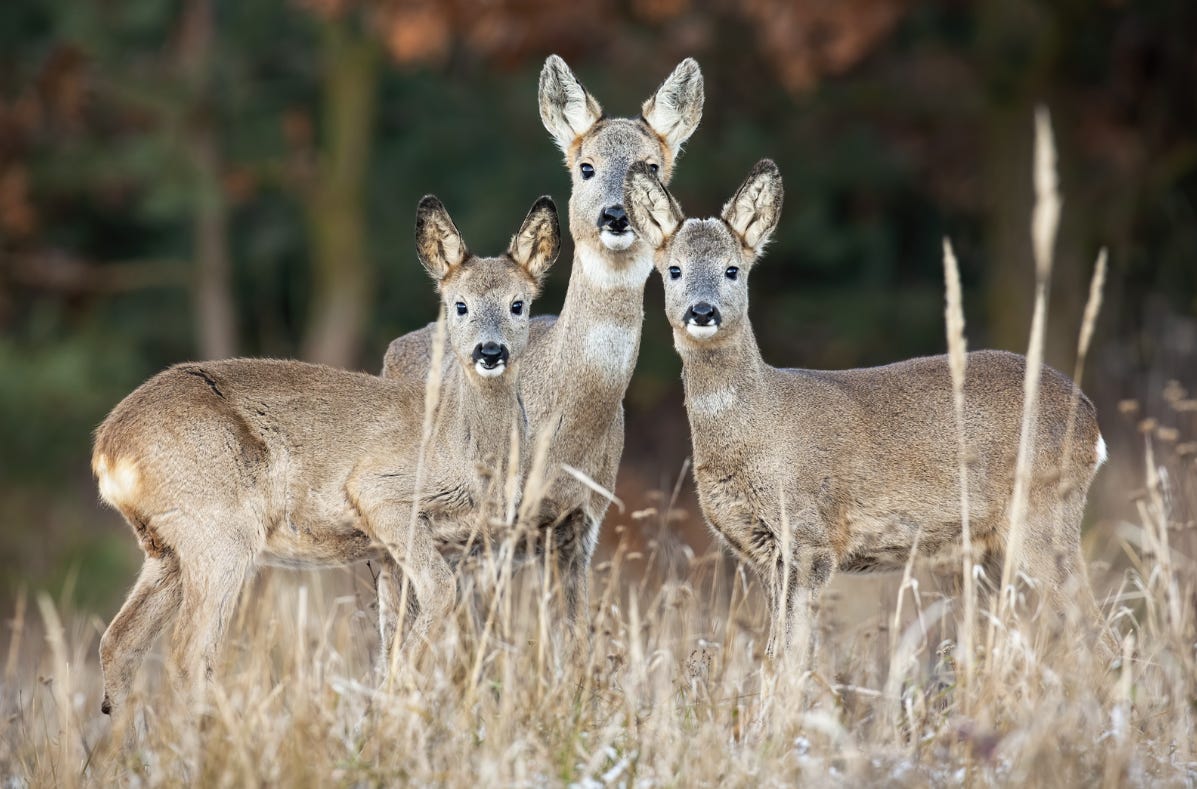
On a balmy August evening, Anne and I sat on the floor in the family room discussing how to arrange our furniture when it finally arrived. We looked forward to having more than an air mattress on the floor to sleep on. As we talked, several whitetail deer quietly approached the house. When they saw us there through the sliding glass door, they stopped.
Mesmerized by their closeness to us—our eyes locked onto theirs. We could see their tiny radar-dish ears straining to catch any sound emanating from inside the house. Their nostrils flared as if they were trying to extract our scent through the glass. Still uncertain what to do, they continued to stare at us. Whether we were dangerous or not, we were intruders, and they wanted us to know it.
The people who built the house three years earlier—a young couple with two toddlers in tow—had hammered the last nail, decorated the kids’ rooms with brightly colored murals, stacked dishes in the cupboards, and arranged silverware in the drawers. Their dream house was finally ready. To celebrate their hard work and its completion, they decided to spend a weekend in a rented cabin in the Northern Michigan woods, the whole family together before they began their new life on the farm.
They never got to enjoy their new home. A faulty kerosene heater in their vacation cabin exploded, killing the entire family.
The man’s parents, who lived about ten miles away from the new house, took possession of it, but left everything exactly the way it had been when their son and his family drove off to their getaway cabin. The parent’s grief was so deep, they couldn’t bear to do anything with it. The deer had no reason to fear humans because, for as long as they could remember, no humans had been around this house.
After the reality of this tragedy sank in and three more summers passed, the parents finally decided to rent out the house. Anne and I saw the ad on the first day of the listing in the local paper. We jumped on it. It was exactly what we were looking for. A small house in the country that was close enough to my job yet far enough away for us to live a private life.
After we told them that we wanted to rent it, they told us its story. They wanted to make sure we were comfortable living there given the circumstances. Because even though the family was miles away when they died, the parents believed that their spirits were still on the property, and maybe inside the house. We told them we would be honored to move in, and we promised to take good care of it. They agreed to rent it to us.
Through the autumn and a long Michigan winter, we watched for signs of haunting, of the spirits our landlords believed would be sharing the house with us. The only inexplicable occurrence, a thermostat that repeatably turned itself down, kept us wary but not afraid. We settled in, and before long, it felt like home.
When spring finally arrived, when crocuses poked their white and purple heads out from the blanket of snow, I began planning a garden. Not a vegetable garden. I wasn’t into that. I wanted to plant flowers. An empty garden bed, one the family created on the driveway side of the house in anticipation of their first summer, seemed like the obvious place.
The problem with it was that the bed faced north. At that time in my life, I didn’t know anything about native plants, but I knew that most flowers, native or not, needed sun, and this plot didn’t get much. I knew a little about annuals such as pansies and impatiens, because my mom had planted them in the front garden of the house I grew up in, but that was about it. Perennials, even the popular non-native bulbs like bearded irises and tulips, intimidated me. So, I did what we did in the days before the internet, I went to the local garden center and asked a human being.
The man I approached suggested coleus. I had never heard of coleus, but I liked the look of the ones they had for sale so, taking his suggestion, I bought ten plants.
I planted them on a late May afternoon, after the snow had melted and last year’s corn stalks had been plowed under the earth in preparation for this year’s crop. I planted them with no experience with how they would grow, or if they’d even survive. But survive they did. Within a few weeks, they’d settled in and spread their beautiful leaves upward and outward to fill the small garden plot.

One day in late June, I saw a car pull up into the long dirt driveway.
We didn’t get many visitors, so I rose from my chair to greet them. It was our landlords—the parents of the family who died. We hadn’t seen them much over the winter, which we appreciated, but they arrived this summer day to check in on us.
When I approached them, I could see that the woman was crying. And not just tears running down her cheeks. She was convulsed in tears. I stood there not sure whether to move closer. Her husband, a hard-working, strong, silent-type farmer, came around the front of their truck and awkwardly put his arm around her.
When she regained some control, the first thing she choked out was, “Flowers! You planted flowers!”
“Yes, I did,” I said, still keeping some distance. “I hope it was OK.”
“There’s, there’s life here.” She exclaimed as she stared at the beautiful red, pink, orange, and green foliage of the bed of coleus. “I can feel life for the first time.”
She wiped her nose with an old bandana her husband handed her. “Thank you,” she whispered.
On impulse, I moved closer and gave this grieving mother a hug. “I’m glad you like them,” I said.
“I do,” she replied. “I do.”
They didn’t say much more.
I’m not sure what motivated their visit that day, but soon after that, they stopped by again and told us that they were moving a horse and a couple of cows into the paddock. We didn’t need to do anything with them, they told us. They’d take care of them, but they wanted us to know that they’d be stopping by each morning and evening.
At the first freeze that next fall, the coleus shriveled up, and a few days later, after yet another freeze, I dug them up. We’d enjoyed their beauty, and, as quietly as the deer, they helped a mother grieve and reminded her that life goes on, even after a loss that defied words.
After our second winter, the owners told us that they would not be renewing our lease.
“Now that there’s life here again,” she paused, and then she added, “Now that you brought life here,” A slight smile clashed with her still sad eyes, “We’re ready to move in ourselves. I hope you understand. You’ve been good tenants, and without you, we never would have been able to consider living here. Thank you.” she said.
Anne and I moved that spring and never saw the parents again. A couple of years ago, I drove by the property to reminisce about those times. The house was gone. It’d been replaced with a larger one with a two-car garage and a swing set out back. I don’t know if the same family still owned it. I suspect the parents had already passed on by then.
What I do know is that those flowers, a few coleus plants on the side of the house, brought healing simply by being there, growing big for a novice flower gardener who didn’t know what to expect and for a grieving mother who’d once imagined a lifetime of beauty in that yard.
I hope you’re enjoying your spring, wherever you are. I’ll be writing more about flowers, with a focus on native habitat gardening, in upcoming posts. Thanks so much for reading!
Yours in peace,
Annette

Note: the photos in this piece are stock representations but not actual photos from the house.
A beautiful piece. Thank you, Annette. This found me on the 13th anniversary of my son’s death. I, too, went looking for life today.
What a lovely read. Your words pulled me in and held me. I strongly believe that there is healing in nature. <3