


In Part 1 of this post, we followed Lake Superior from Sault Ste. Marie to a campground on its rocky northern shore at Rainbow Falls Provincial Park.

In Part 2, we continue west toward Thunder Bay, following the lake even when the road occasionally pulled us away from its shoreline.
Best-laid plans
Sometimes even the best-laid plans take an unexpected turn. That was the case with camping. We’d originally planned for six nights of camping on this trip. We’d gathered our camping gear, found perfectly sized crates to store it in the back of the truck, and felt confident that we had everything we needed for comfortable tent camping experiences, including cots, sleeping pads, and even a portable toilet to use inside the tent.


Our plans began unraveling, however, before we ever pitched the tent. We canceled two nights at Hocking Hills State Park on our return trip so we could spend more time with the daughter of a dear friend who had been part of my life for more than fifty years and had just died.
Then, as we left Traverse City for Mackinaw City, where we expected to camp, the weather turned ominous. A red warning flashed across my phone: severe thunderstorms and two-inch hail. Rather than set up camp in the middle of that, we opted for shelter of the hotel variety.
That left us with two nights at Rainbow Falls Provincial Park for our long-awaited camping experience. And, yes, I’ll admit, I picked this park partially because of its name. Right on Superior’s northern shore, this campground boasted everything we’d dreamed about when dreaming about this trip—a small, quiet, beautiful campground with lapping waves to lull us to sleep.
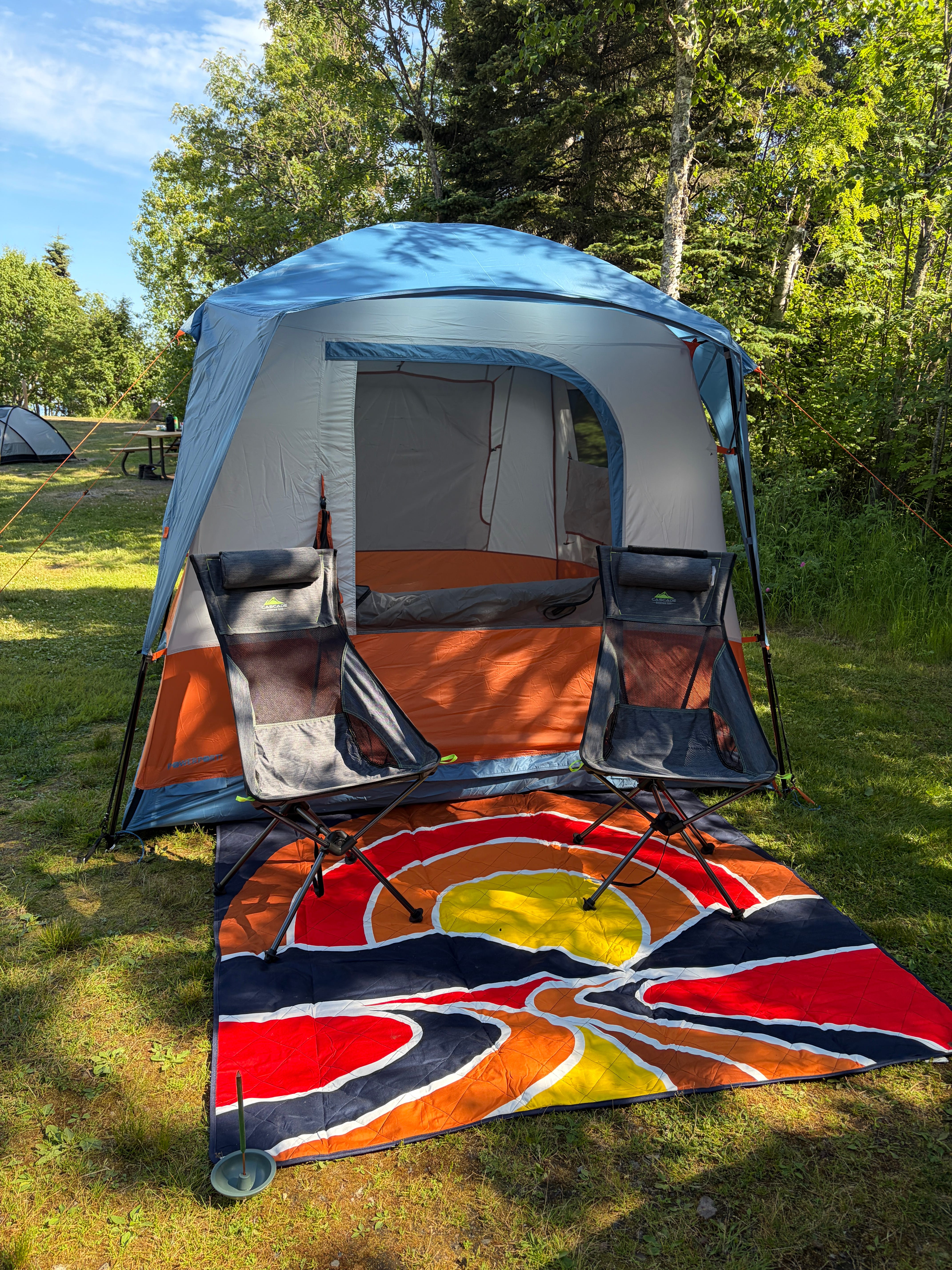
Unfortunately, we discovered that the mosquitoes and black flies were not lulled to sleep by anything. After Wendy counted 50 bites, we decided we were not out to prove what rugged outdoor people we were. So, we did what other reasonable people would do—we pivoted and secured a hotel for our second night.
It’s important at this juncture to remember that we were out in the middle of the Canadian wilderness. It’s not like there was a Holiday Inn Express every few miles. When I looked at the map ahead of us, there were three motel choices. Two were right on the Trans-Canada Highway and one was a few miles south, nearer to the water. Even though the bugs had driven us from the our campsite, I wasn’t ready to give up the lake entirely. So we headed for the one tucked closer to the Superior shore.
The town that time forgot
The hotel, the Red Rock Inn, gave us the impression that the last time it had been updated was before I was born. I’ve since discovered that this hotel has an incredible history that includes housing the Canadian Veterans Guard as they watched over a German prisoner of war camp in the 1940s. Over the years, the building has housed a bank, pharmacy, dentist’s office, library, local bar, and even a school. In addition, the Live from the Rock Folk Festival brings a burst of energy to this town of less than 1,000 residents each August.
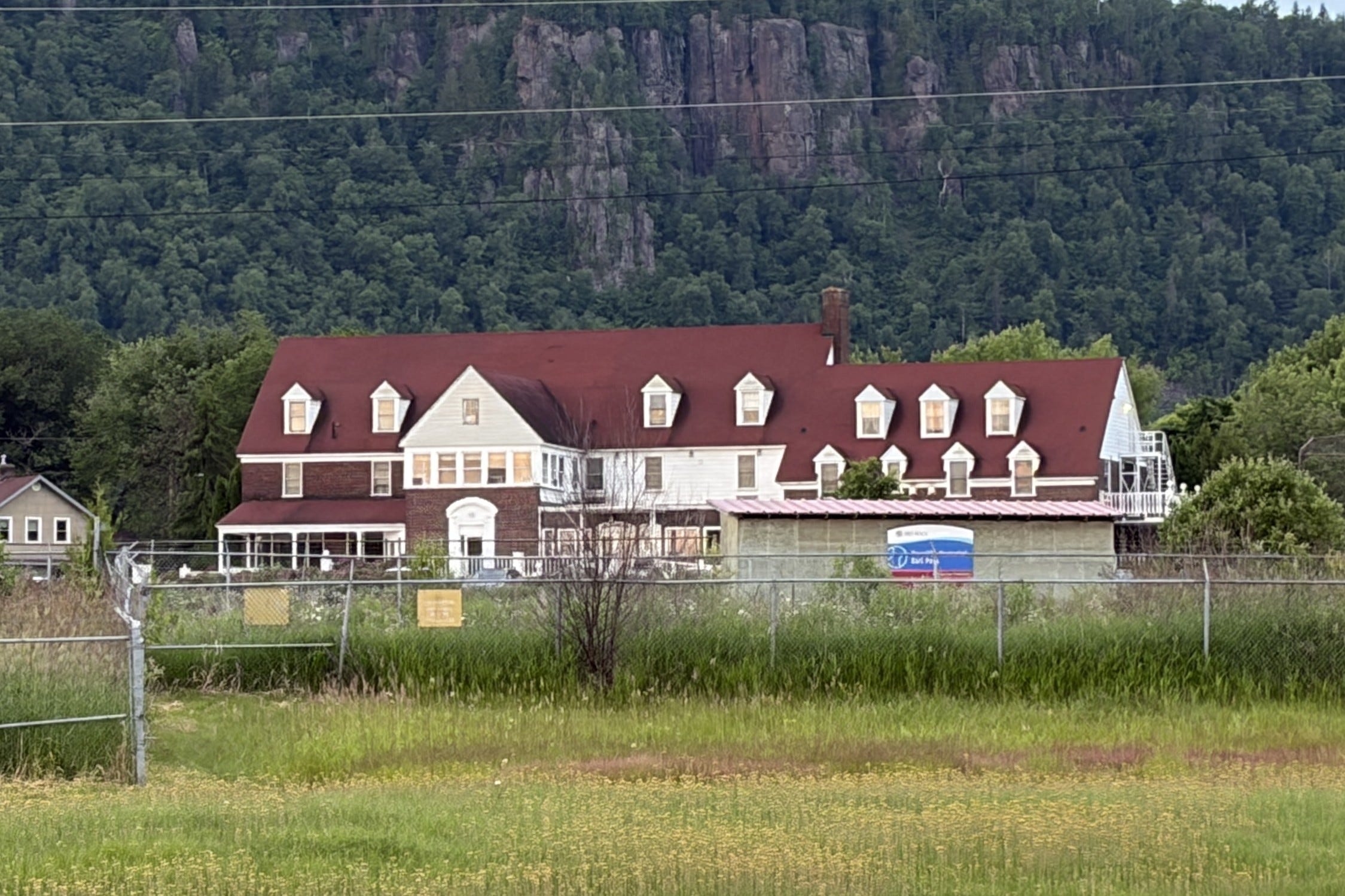
But I missed all that. Instead, I groused about the lack of an elevator and air conditioning, the saggy bed, tin-can shower, tissue stuffed to fill a hole in the screen, and a step so high to get into the bathroom that it required a step stool.
I don’t think I’d stay there again, but if I found myself in similar circumstances, I hope I’d be more curious about the place’s history. You never know what you might discover.
If you’re curious, you can read more about the Red Rock Inn’s history: https://northernontario.travel/superior-country/red-rock-inn
Written in stone
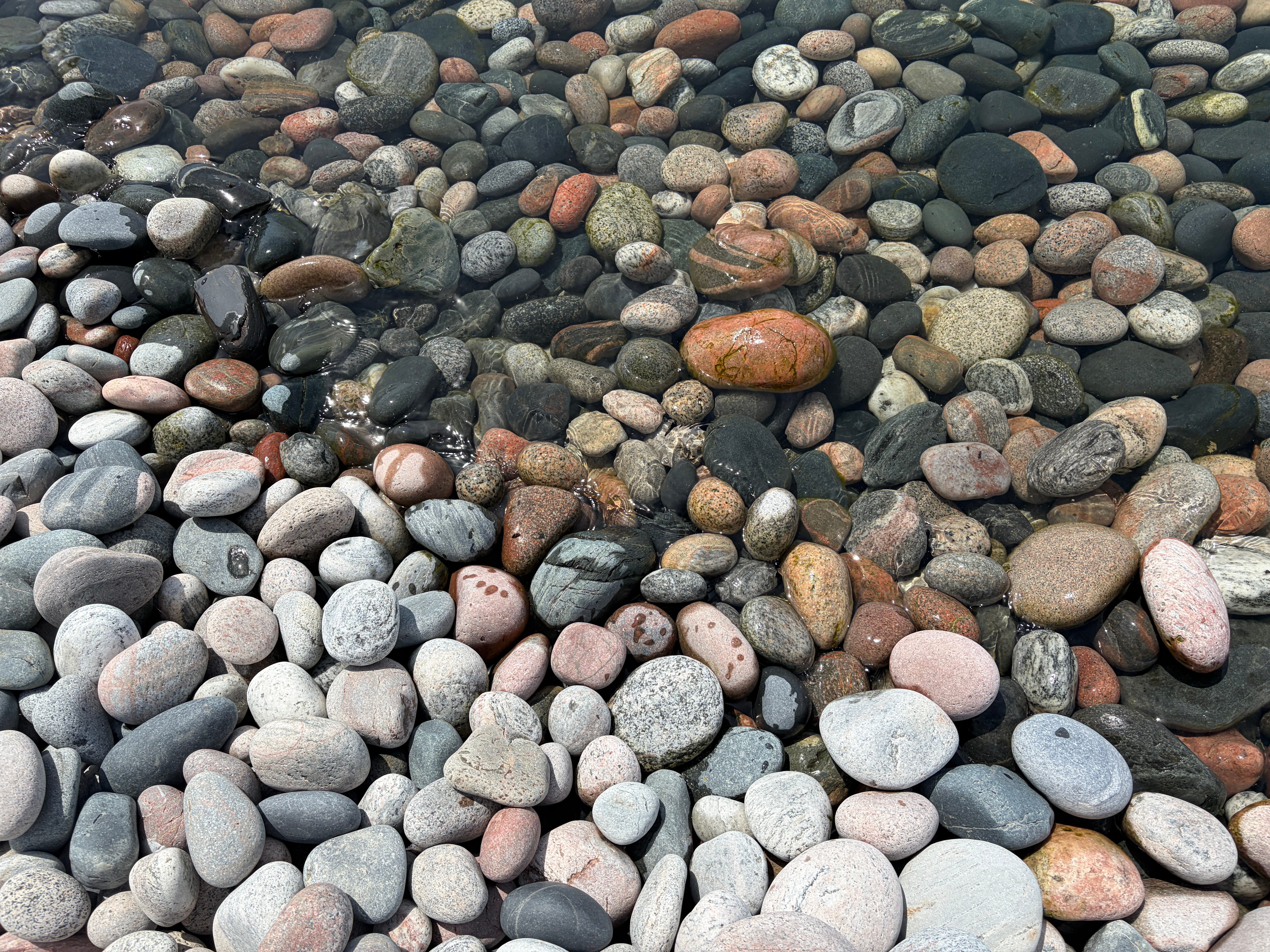
Leaving Red Rock, our attention returned to something that had fascinated us all along the Superior shore—the rocks themselves. From the colorful stones of Pebble Beach on the eastern shore to the amethyst deposits farther north, they appeared in every imaginable size and hue—some small enough to fit in a pocket, others as large as tractor-trailers. Their colors and patterns reflect the extraordinary variety of ancient rock that surrounds the lake, shaped first by volcanic forces and glaciers and then, over countless years, by Superior itself. Waves tumble broken fragments against one another, gradually rounding and smoothing their edges until, in some places, they gather by the thousands to form entire beaches.
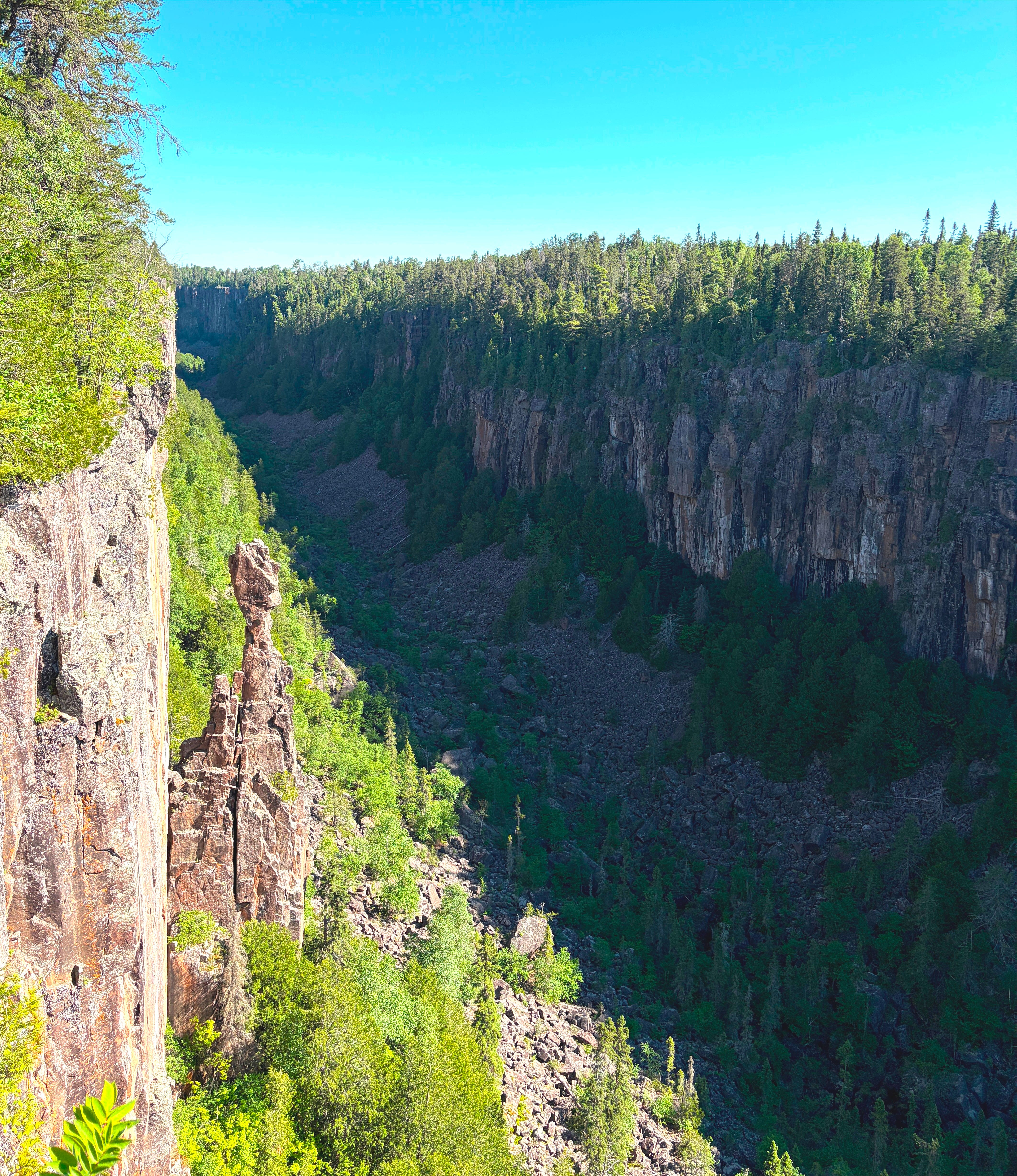
Sometimes the rocks form shapes so distinctive that they become part of legend, as is the case with the formation known as Indian Head in Ouimet Canyon Provincial Park.
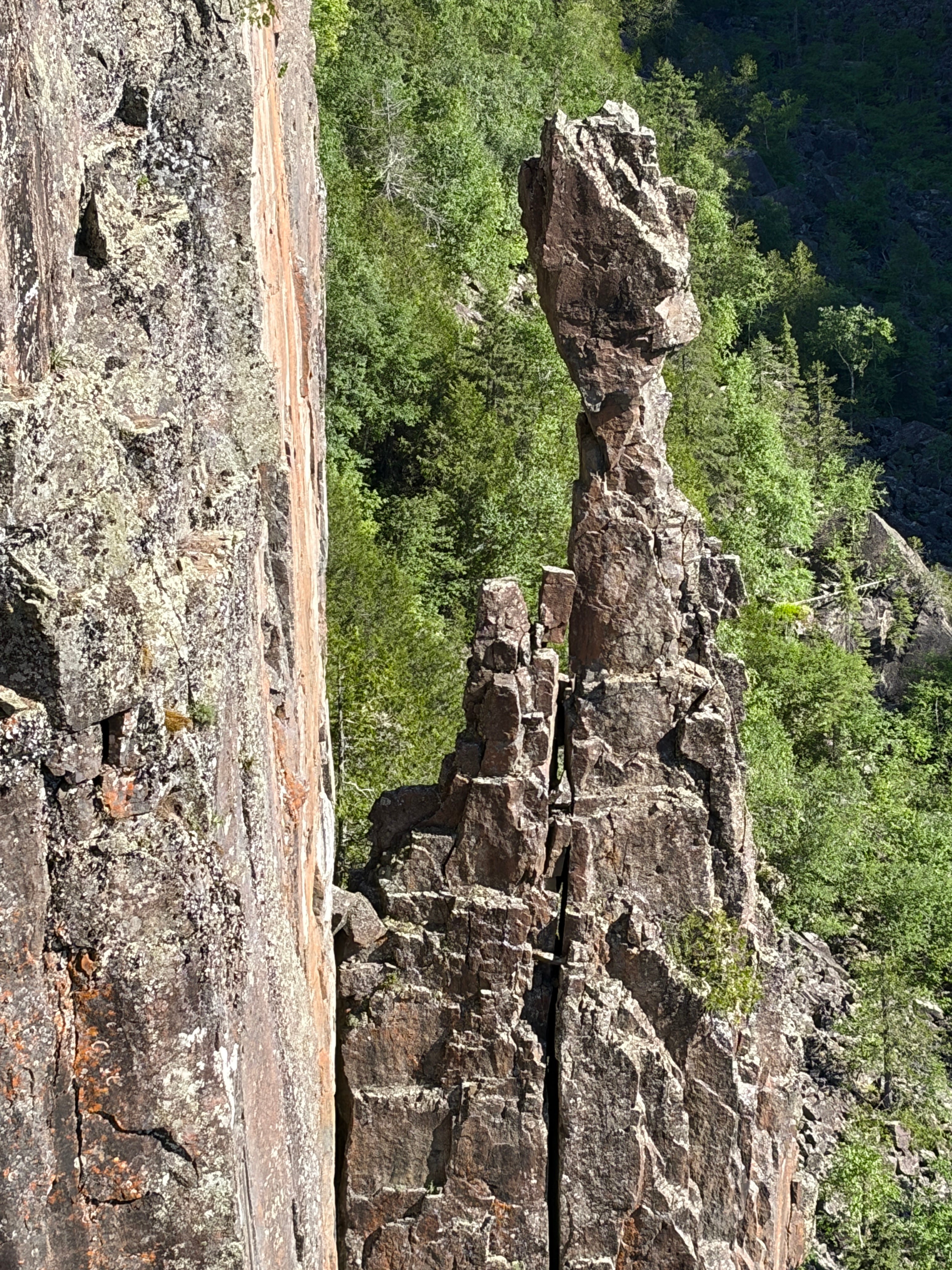
According to legend, a long time ago, there was a giant named Omett. He helped Nanabijou make mountains and lakes. Omett fell in love with Nanabijou’s daughter Naiomi. One day, Omett was moving a mountain when part of it fell off and killed Naiomi. Omett quickly hid Naiomi. Nanabijou desperately looked for his daughter. When he sensed something underground, he sent a thunderbolt that split open the ground, creating the canyon and revealing his daughter at the bottom. He buried her there and to punish Omett he turned him into stone and put him on the canyon walls to watch Naiomi’s grave forever.
Legend gives the canyon one story, its unusual geology tells another. The canyon that houses this unique feature is a massive gorge measuring 328 feet deep and 492 feet wide. The area features complex ecosystems where Arctic plants grow at the bottom of the canyon, despite being 1,000 miles from their typical tundra habitat.
As we moved closer to Thunder Bay, we couldn’t resist the pull of the amethyst mines advertised on the roadside. Amethyst is the official mineral emblem of Ontario and is a draw for anyone who loves purple—like us.
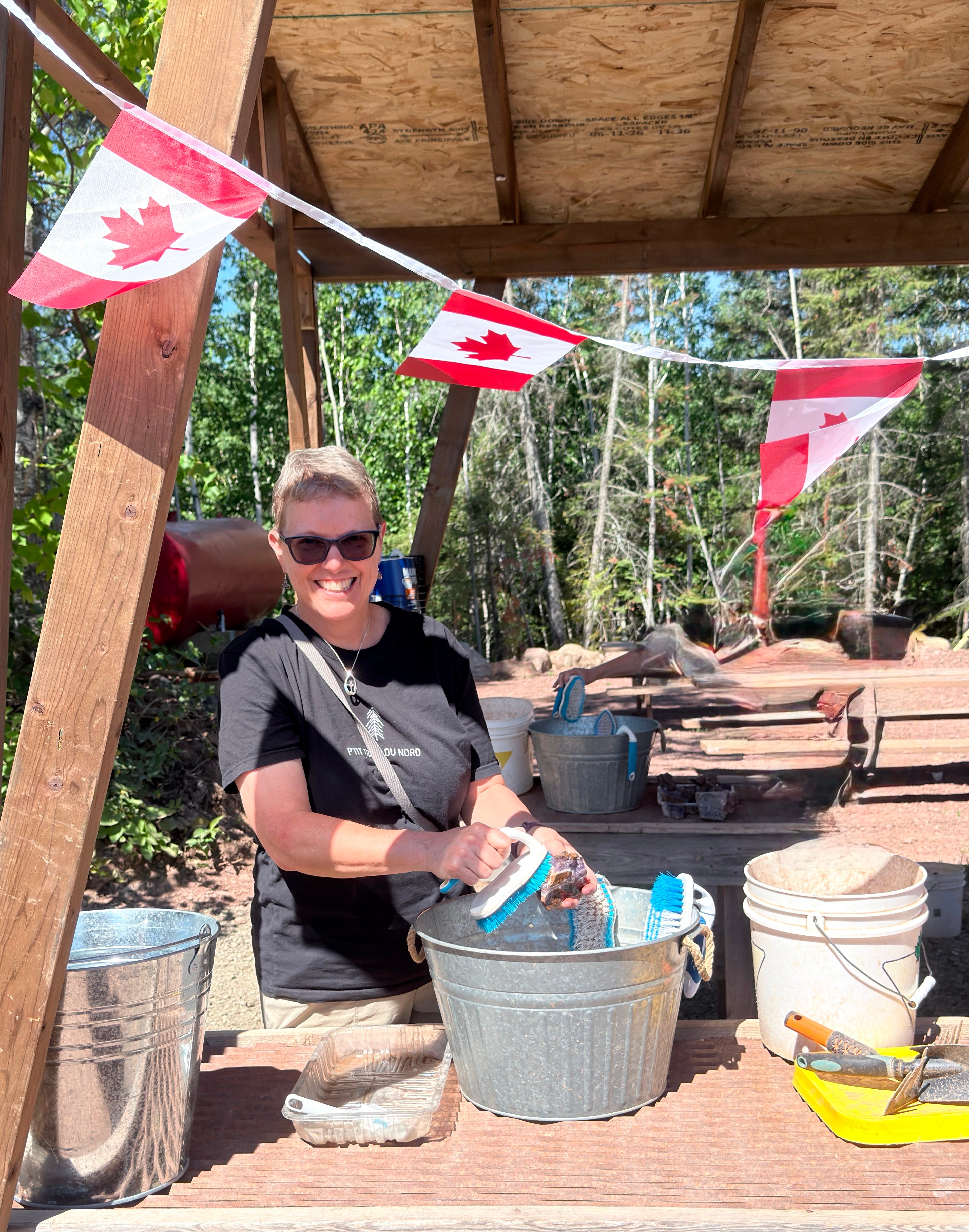
We chose to visit the Diamond Willow Amethyst Mine, in the Municipality of Shuniah, a multigeneration family-owned business that seemed a little less commercial than a couple of the others. Neither of us had ever been rockhounding, so we didn’t know what to expect, but this place made it easy. They handed us a bucket and trowel and directed us to an area where mini bulldozers had deposited various piles of rocks from the mine earlier that day. All we had to do was sift through them to find our treasures.
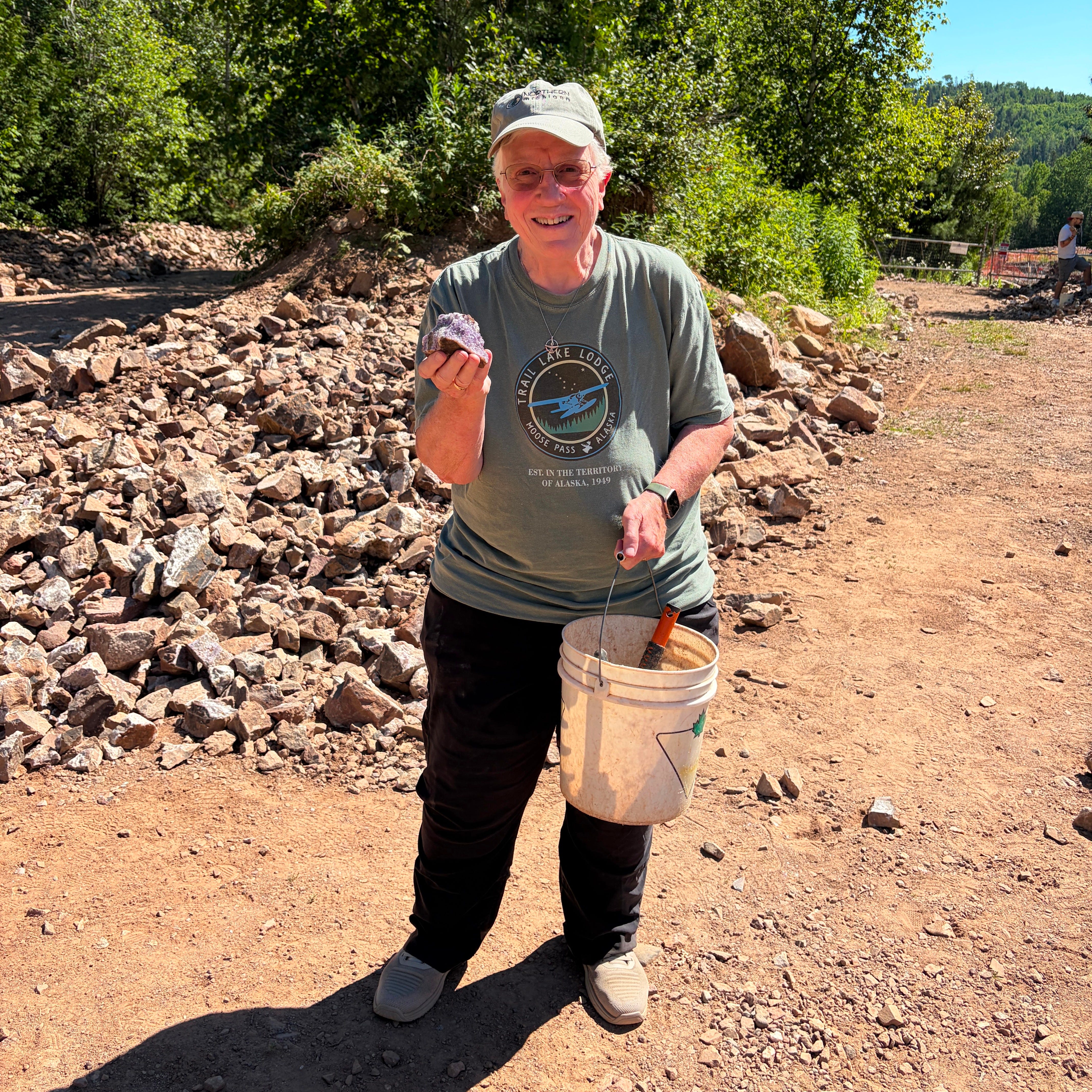
Kids were built for this work—scrambling over piles and turning over rocks. We were not, especially on a hot Ontario day. Even so, at the end of our excursion, we were happy with the $10 quarter-bucket of beautiful purple rocks we’d discovered.
Reliving history
The final leg of our portion of the Lake Superior Circle Tour took us to Thunder Bay, which sits at the northwest corner of the lake. We had left the wilderness and were back in civilization. Over 120,000 people call Thunder Bay home, so after days when forest, rock, and water had dominated the landscape, traffic lights, chain stores, and busy streets felt strangely jarring. Yet even here, Lake Superior remained impossible to ignore.
Our escape into the wilderness offered quiet and solitude. The city presented the opposite. But that didn’t stop us from exploring it. We love walking around cities almost as much as we do hiking forest trails. In this case, we discovered that the downtown area is currently being revitalized. There are a few restaurants and coffee shops, but it will take more time before it’s a vibrant city center. I hope it makes it.
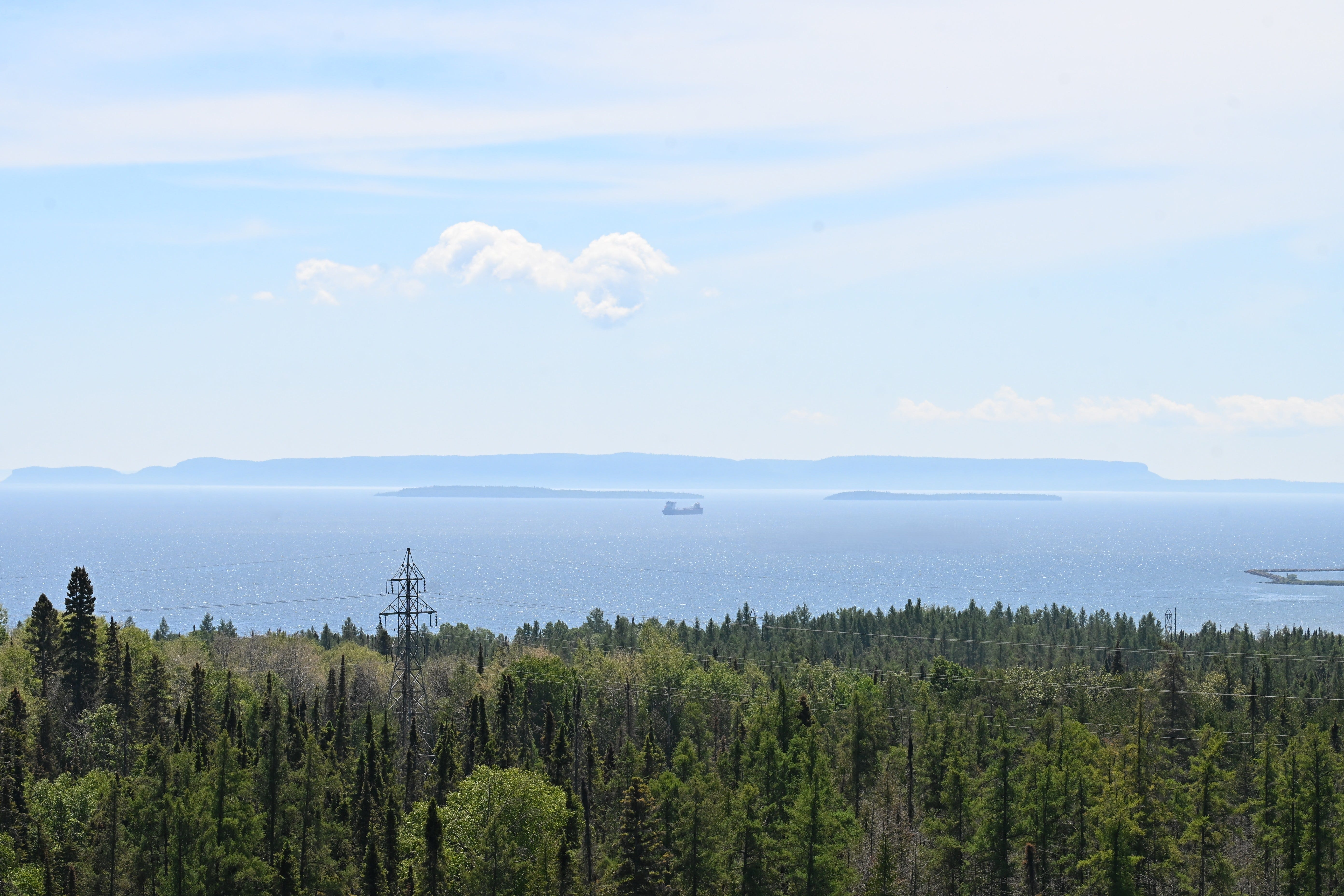
Only 36 nautical miles from Thunder Bay and clearly visible from the downtown area sits Isle Royale National Park (a US national park), which I fell in love with after hiking there many years ago. However, because it crosses an international border, there’s no direct public ferry service from Thunder Bay. For me, its familiar silhouette on the horizon was another reminder of how this enormous lake connects places that seem worlds apart.
Just south of Thunder Bay sits Fort William Historical Park, an early-19th-century fort, which served as the inland headquarters of the North West Company, the world’s largest fur trading enterprise with posts stretching across North America. At Fort William, the waterways we had been following became not scenery but transportation routes, the highways of an earlier era.
When we entered the park, we first encountered an Anishinaabe encampment, home to some of the local Ojibway who continue to practice the old ways.
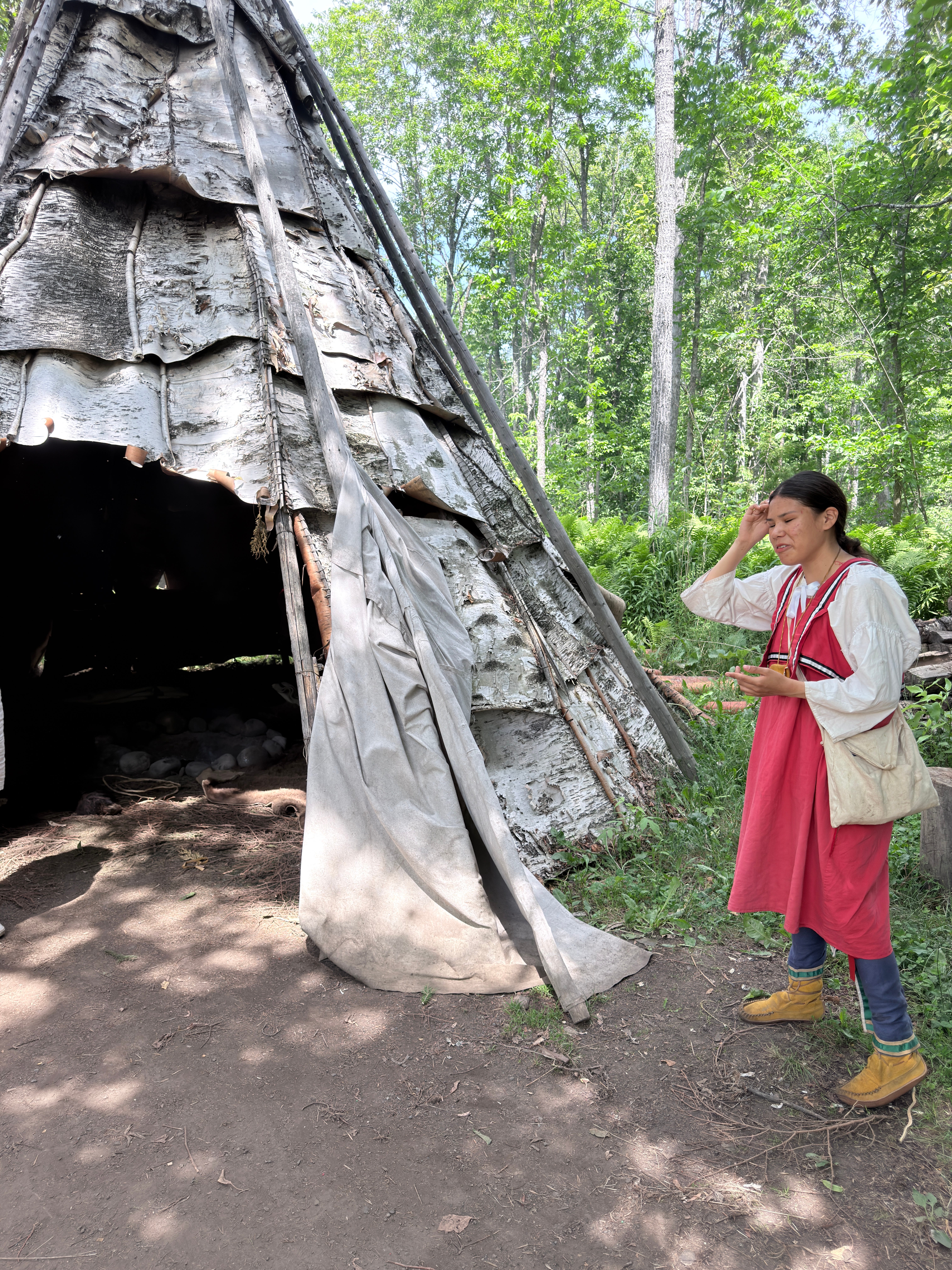
Here we learned something I didn’t know about the use of birch in building canoes and wigwams. I always thought that in order to use the birch, you had to cut down the trees and then strip the bark. However, in the early spring, Ojibway people cut a slit in the bark, insert their hands between the bark and the trunk, and pop it off. Harvested carefully, the tree can survive. In twenty years, the bark can grow back, restoring the tree for the next generation. If only everyone considered the needs of those who will come next. What a different world it would be.
As we continued into the fort, we heard the piercing notes and resonant hum of a bagpipe as a man dressed in a tartan kilt and Glengarry cap approached the square. We listened for a while and engaged him in conversation about the challenges of learning to play the bagpipes, not the least of which is finding a place to practice out of earshot of anyone else.
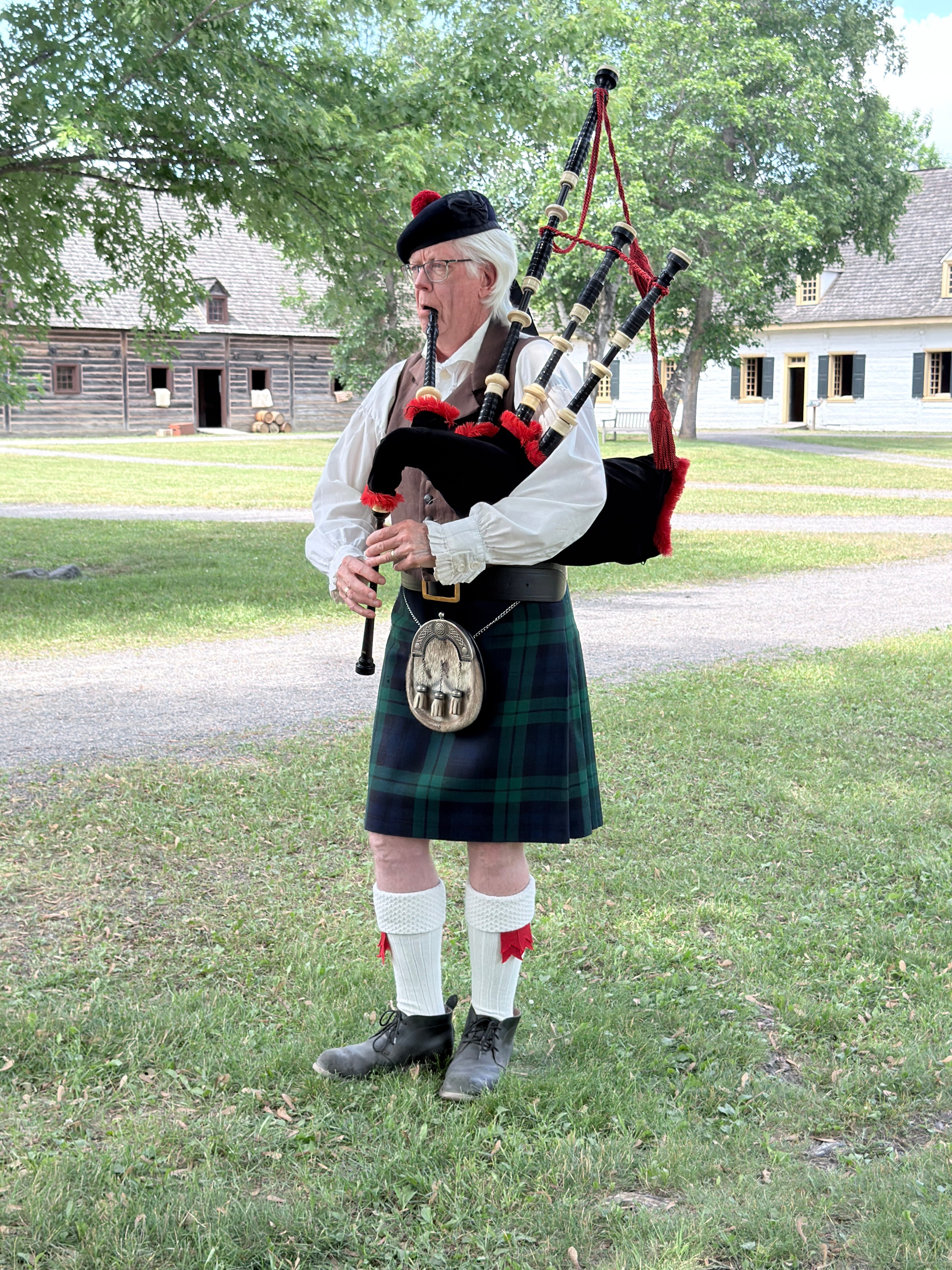
In other spots around the fort, we watched women prepare a meal, examined furs readied for shipment, greeted voyageurs as they returned to the fort, and even shot a musket (albeit with no ball for the gunpowder to propel).


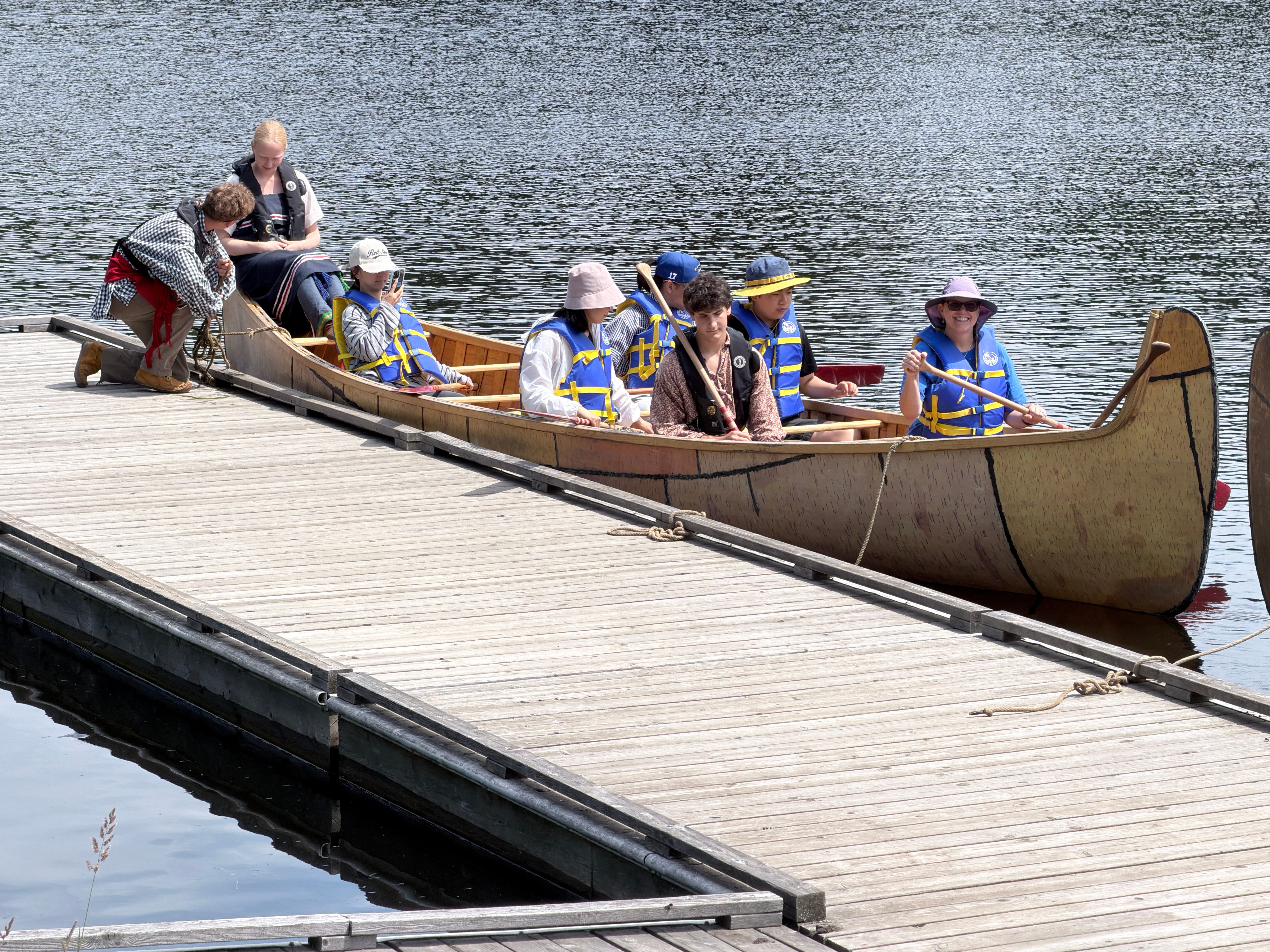
Although all that was interesting, Wendy had her heart set on taking a river trip in a birch-bark canoe (actually, for safety reasons, a modern replica of a birch-bark canoe). The park had advertised tours, but we quickly learned that each tour required a minimum of three guests. I wasn’t confident I could get in and out of a canoe safely, but I said I’d go if there were no other options. But even with the two of us, we had to wait for someone else to approach. No one did.
Before long, Wendy took matters into own hands. She headed back into the fort and within minutes came out with five additional guests following her like ducks on the river. I couldn’t help but laugh. Relieved of my obligation to accompany her, I stayed ashore and photographed their journey.
From the river to the lake
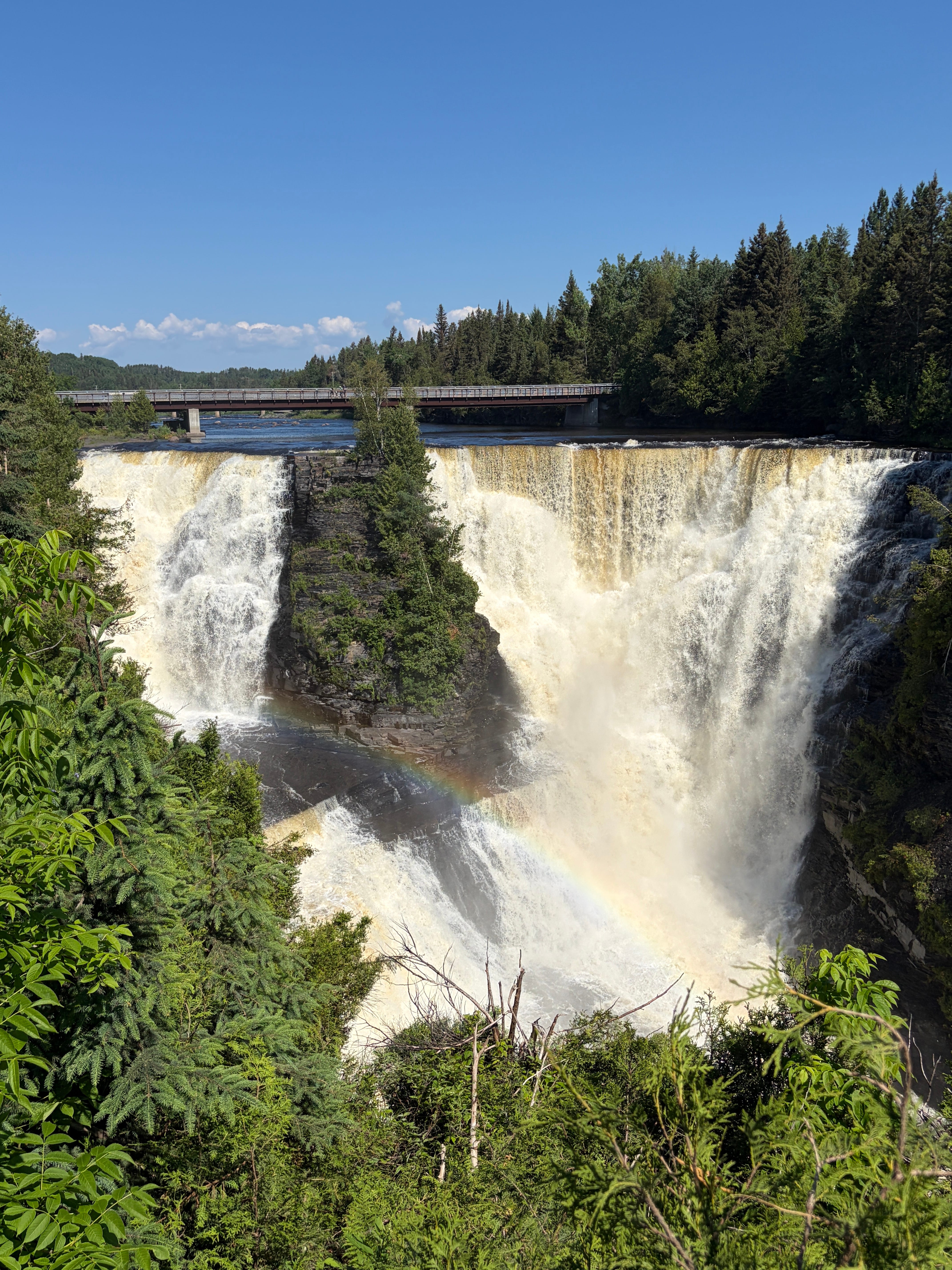
A half hour west of Thunder Bay, the roar of a waterfall known as the “Niagara of the North” greeted us before we even left the parking lot. We needed no trail marker to point the way. The sound itself drew us toward the thundering cascade.
What better way to end our Lake Superior Circle Tour than beside Kakabeka Falls, knowing that the Kaministiquia—the same river Wendy had paddled the day before—would carry all that rushing water onward to Superior. Like the hundreds of other rivers and streams threaded toward its shores, the Kaministiquia fed the lake that had shaped every day of our journey.
Letting the road be our guide
Everywhere we went on this journey, we felt the pull of Lake Superior and the rugged country surrounding it. But some of our best moments weren’t on the itinerary at all. They came from changing course, lingering longer than expected, or following a roadside sign to a place—like the amethyst mine—we hadn’t even considered before leaving home.
That, for us, is the joy of a road trip. We may choose the route, but if we leave enough room for the unexpected, the road begins making choices of its own. Along Lake Superior, we let both the road and the lake guide us. I can’t imagine a better way to travel.
Yours in peace and beauty,
Annette

If you connect with this post, I’d love to hear from you. Every comment you leave and every time you share a post, you improve the visibility of this post for other Substack readers. So, for both reasons, your comments and shares are especially appreciated.
Annette’s Wanderings is a reader-supported publication. All my posts are free for everyone. But even though I don’t put up paywalls, a paid subscription goes a long way to helping to support my writing. Please consider becoming a monthly or yearly paid subscriber. If you’re one already, you have my undying gratitude! Thank you for all your support!
Another wonderful vicarious trip for your readers...thanks so much, Annette!
What a fabulous excursion in a part of the world so near...so far... thank you for sharing this great adventure.