


On March 7, 1965, a fourteen-year-old girl suffered a violent beating by police, a beating so severe that it required seven stitches over her eye and twenty-eight in the back of her head. She wasn’t beaten because she committed a crime. She was beaten because she was standing up for the rights of Black Americans who were demanding their civil and voting rights. Just two weeks later, that same little girl marched from Selma to Montgomery, Alabama, as the youngest participant in the Selma to Montgomery March.
When Lynda Blackmon Lowery, author of Turning 15 on the Road to Freedom, shared her motivation for wanting to go on the march, she wrote:
I wanted to go and show George Wallace what he had done to me. I wanted him to see my swollen face and my bandaged head. I wanted to let him know that he wasn’t going to do that to me ever again.
I had the honor of knowing Ms. Lowery, as part of my work with the Living Legacy Project, an organization I co-founded and recently retired from, that teaches Civil Rights Movement history by taking people to the places where these stories happened.
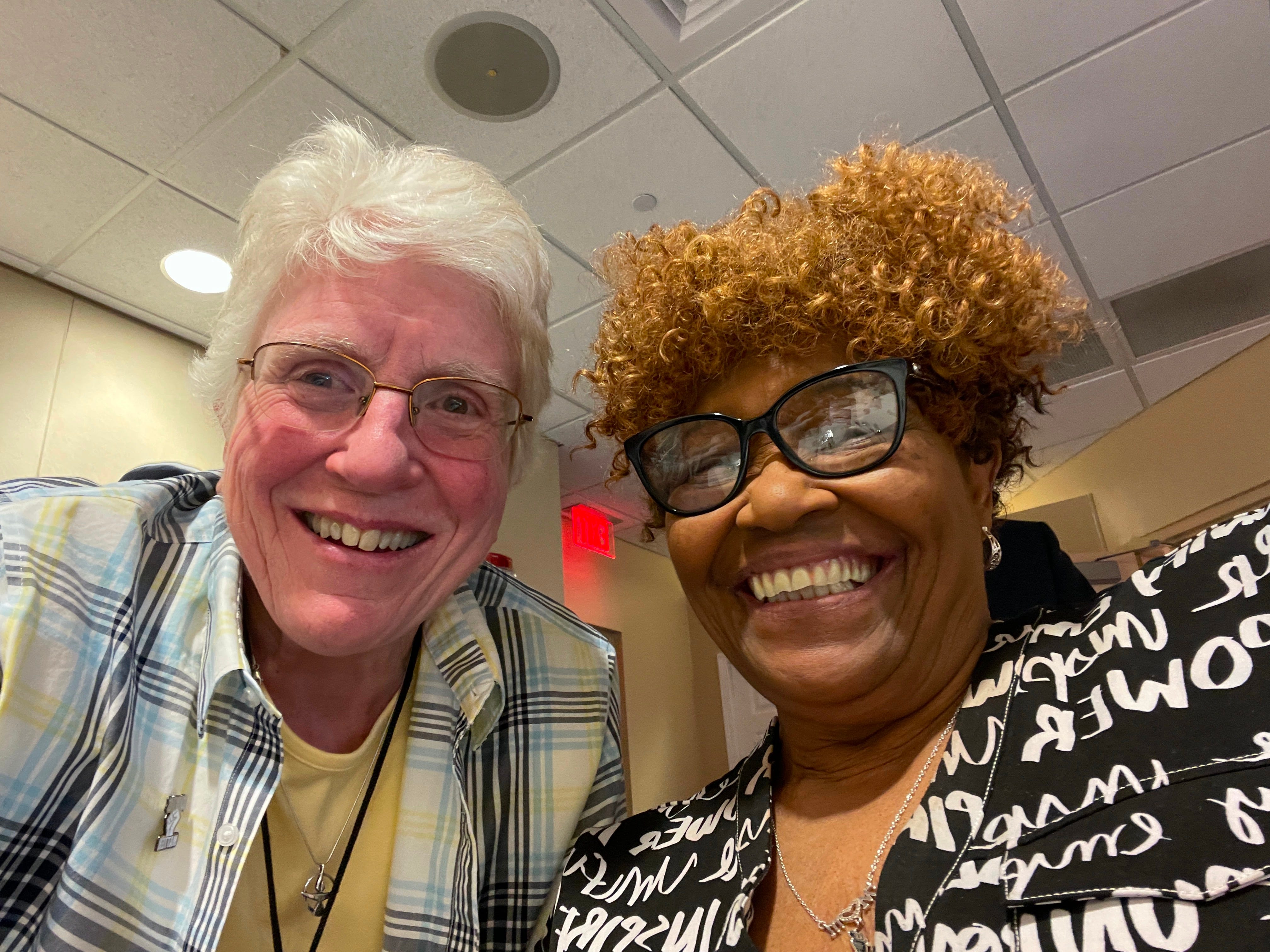
Each time I met Ms. Lowery and her younger sister, JoAnne Bland, who was also on the Edmund Pettus Bridge that day, they greeted me like a long-lost friend. Their warmth and welcome inspired me long before I heard them recount their stories from that fateful day to a new group of pilgrims we brought to meet them.
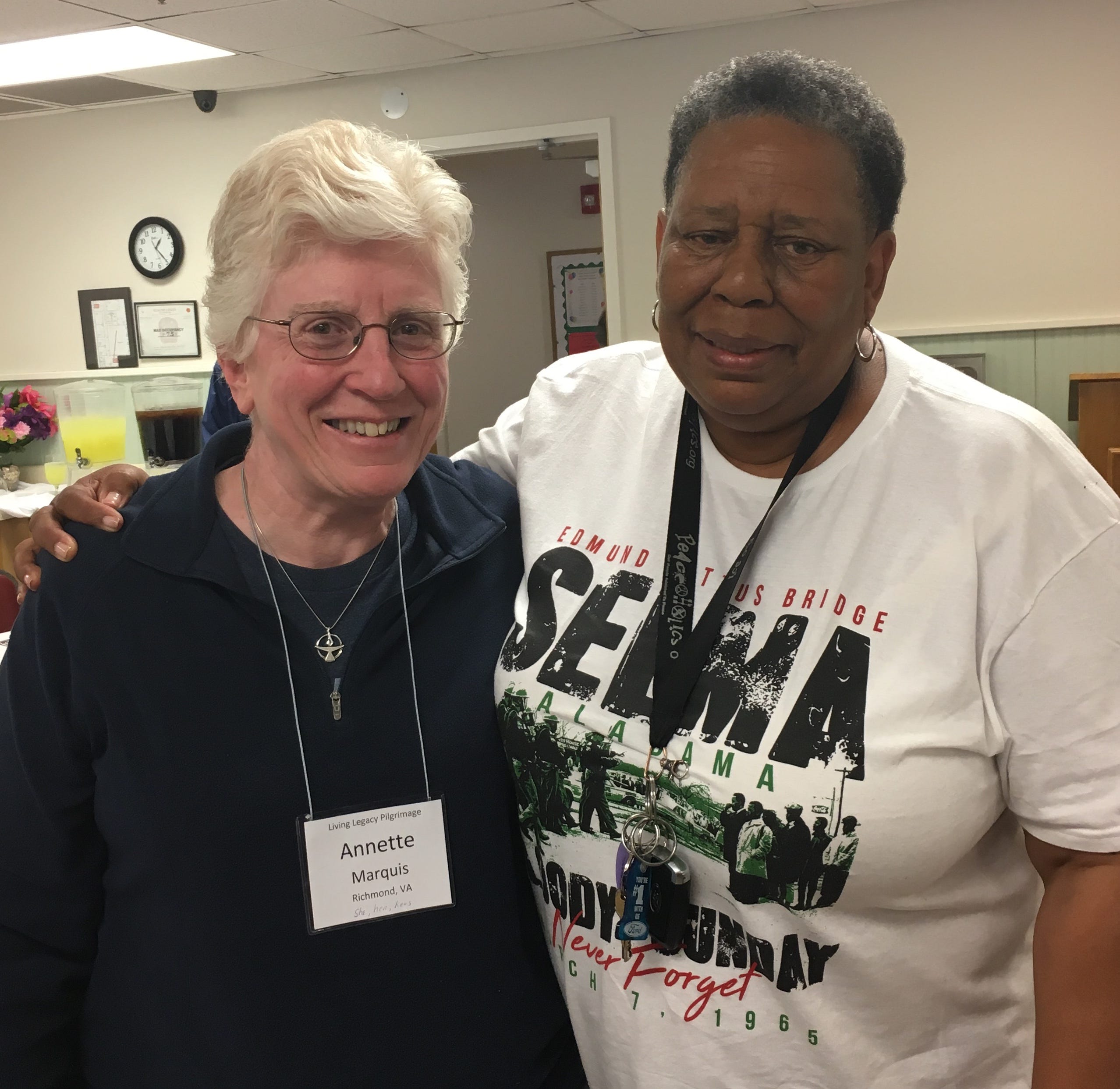
Ms. Blackmon Lowery died on December 24th, 2025, a life cut short by illness at just 75 years old (“Civil Rights icon remembered in Selma”). But her contributions to the most effective civil rights campaign in US history will not be forgotten, partly because of the work of her sister in the creation of Foot Soldiers Park, an organization whose mission is to “honor our civil rights past by fighting for Selma’s future.”
Martyrs of the Voting Rights Campaign
People died in the fight for voting rights. Alabama State Police shot and killed Jimmie Lee Jackson, a young Black man from nearby Marion, Alabama, on February 18, 1965. His murder was, in fact, a major catalyst for the Selma to Montgomery March. Organizers wanted to deliver Mr. Jackson’s body to Governor George Wallace, just like Ms. Blackmon Lowery wanted to deliver herself.
On March 9th, two days after the event known as Bloody Sunday when Ms. Lowery was beaten, several local White men attacked three White Unitarian Universalist ministers, James Reeb, Clark Olsen, and Orloff Miller. A couple of days after the attack, Rev. Reeb died from his injuries.
A few days after Rev. Reeb’s death, President Lyndon B. Johnson delivered a historic nationally televised address to a joint session of Congress, presenting the Voting Rights Act. He invoked Reeb’s memory and the “outrage of Selma,” declaring the right to vote as fundamental to American democracy and calling for immediate legislative action.
On the day that the historic march reached Montgomery, Viola Liuzzo, a White civil rights volunteer from Detroit who had been shuttling marchers between Montgomery and Selma, was shot and killed by Ku Klux Klan members on Route 80. Within 24 hours of her murder, President Johnson went on television to announce the arrests of KKK members responsible for the attack and demand an immediate Congressional investigation of the KKK. Ms. Liuzzo’s murder also moved Johnson to petition Congress to expand the Federal Conspiracy Act of 1870 to make murder of civil rights activists a federal crime.
However, the FBI, under the leadership of J. Edgar Hoover, actively worked to turn the American public against her.
The FBI criticized Ms. Liuzzo’s involvement in Selma, saying she was “out of her place” and should have stayed home with her children. As a result of the FBI’s smear campaign, including insinuating that she only went to Selma to meet men, a Ladies’ Home Journal survey showed that only 26 percent of readers approved of Mrs. Liuzzo’s mission in Selma. Her husband Jim and the children became victims as well, besieged with hate mail and phone threats.
Liuzzo’s children, who I also have the honor of knowing, were threatened and taunted, and a cross was burned on their lawn, prompting the need for round-the-clock guard for the next several years. Investigations indicate that the FBI smeared Ms. Liuzzo to deflect attention from the fact that an FBI informant, Gary Rowe, was in the car with her killers, and there’s a strong indication that he might have been the shooter.
For more about Ms. Liuzzo’s murder and subsequent smear campaign read From Selma to Sorrow, The Life and Death of Viola Liuzzo and watch the documentary, Home of the Brave).
History Repeats Itself
And that brings us to today. On January 7, 2026, Renee Nicole Macklin Good, a 37-year-old mother to a six-year-old boy, was shot and killed by ICE agents in Minneapolis, a few blocks from her home and less than a mile from where George Floyd was killed by police in 2020.
Secretary of Homeland Security Kristi Noem is calling Wednesday’s fatal shooting involving a federal agent self-defense against “an act of domestic terrorism. Ms. Good is being described by the FBI as a terrorist who set out to kill ICE agents. All indications are that this wife, mother, writer, and poet, did nothing of the sort (“Renee Nicole Good, murdered by ICE, was a prize-winning poet. Here’s that poem”). She attended the protest as a legal observer, who was probably terrified by the aggressive actions of the Federal agents, and reacted by trying to drive away. Yet, she’s being smeared by the same government agency that smeared Viola Liuzzo some sixty years earlier.
In order to control their warped narrative, today’s FBI has cut off The Minnesota Bureau of Criminal Apprehension (BCA), the agency whose job it is to investigate this death. The BCA has been informed that they will no longer be part of the joint investigation (“BCA cut off from shooting investigation; agency ‘reluctantly’ withdraws”).
Governor Tim Walz has said they will seek accountability and justice.
From here on, I have a very simple message: We do not need any further help from the federal government,” Walz said. “To Donald Trump and Kristi Noem: You’ve done enough.
The question is if anyone will listen.
One in a growing line
It’s important to note that Ms. Good is not the first person killed by ICE in the past year. According to The Marshall Project, federal officers have fatally shot at least three other people in the last five months.
In September, Silverio Villegas González, a father originally from Mexico who worked as a cook, was killed while reportedly trying to flee from officers in a Chicago suburb. In December, a border patrol agent killed a 31-year-old Mexican citizen while trying to detain him in Rio Grande City, Texas. And on New Year’s Eve, an off-duty ICE agent used his service weapon to shoot a man in Los Angeles, California, according to CBS News. Authorities said the man had raised a rifle at the officer.
Why don’t we know their names and their stories? Could it be that they were all immigrants and not considered worthy of news coverage? Just as Jimmie Lee Jackson’s murder by State Police brought little public attention, and it wasn’t until the murder of James Reeb, a White minister, that the President decided to act, are we repeating the familiar narrative that it takes the killing of a White person for outrage to surface?
The assassination of Ms. Good and the smear campaign to discredit her is beyond reprehensible. We have a responsibility to be outraged and demand accountability. But let’s also call government officials to account for all the deaths that have occurred under their watch. Most news stories don’t even report the names of some of these victims.
TheTrace.org investigates gun violence in America and is now tracking gun incidents connected to the current immigration crackdown. You can read their report and stay up-to-date here: How Many People Have Been Shot in ICE Raids? I encourage you to donate to support their work, as I’ve done.
No human life is less or more valuable than another, whether it’s National Guard troops who were ordered to occupy Washington DC, an undocumented immigrant in Chicago, Texas, or Los Angeles, or a White poet from Minneapolis.
Let’s remember all their names. Let’s honor the tremendous sacrifices of people like Lynda Blackmon Lowery and JoAnne Bland, who have dedicated their lives to making sure we remember the Selma story, by ensuring that today’s victims are not forgotten and that Federal officials and law enforcement agents are held accountable.
Rest in peace, Renee Nicole Good, Silverio Villegas González, and those whose names we have yet to learn. We will be fighting for you.
Thank you for connecting the dots between civil rights movements then and now. Legacies persevere and so must we in this time of neocolonialism and systematized violence. Your writing is a powerful and peace-making voice! 💜
This is such an important conversation to be having, Annette - thank you for your detailed and heartfelt commentary. I will be cross-posting this on Qstack today. 🩷