


My wife Wendy hates gardening. In fact, she hates it as much as I hate cooking, which is saying more than you care to know. One year for my birthday, Wendy gave me a gift certificate in which she offered me three hours of gleeful gardening. However, in the fine print it read that she needed twenty-four hours notice so she could get gleeful. The next year, I received a certificate for only two hours and no glee. However, when I started asking her for help restoring our native ecosystem rather than gardening, she became much more amenable. It’s all a matter of framing.
You might feel the same way. If you have land, whether it’s a postage stamp area in front of your urban apartment or a massive suburban lawn requiring a riding mower, you probably do what most of us do. You try to make it as pretty as possible with as little effort as possible. Maybe you care for it yourself or, if the lawn is too big, you pay a lawn service to fertilize, spray insecticide and weed killer, and then mow it into beautiful chevron rows.
And perhaps because you love flowers, you select beautiful flowers and shrubs from a big box store, plant them in beds along the house’s foundation and maybe by your mailbox, and leave it at that. That’s what most of us know how to do to beautify our properties.
I don’t blame you. It’s all I knew until a few years ago. However, what I’ve learned since is that many of the plants, shrubs, and trees sold at big box stores are not only nonnative and some are invasive. That means that they take over native habitats, provide insects and pollinators with little or no food, and squeeze out native plants. In other words, they turn a healthy buffet into a fast-food haven.
Butterfly bush (Buddleja davidii) is a great example of this. Butterfly bush is a fast-growing, deciduous shrub native to Asia, widely cultivated for its fragrant, nectar-rich flower spikes that attract butterflies, bees, and hummingbirds. People love it. I’ll admit that I’ve planted it and thought I was helping the ecosystem. However, not only is it highly invasive, it offers little value as a host plant for caterpillars and can displace more beneficial natives. Fortunately, some states have banned its sale and hopefully, more will join in.
Instead of butterfly bush (Buddleja davidii), nourish your pollinators and hummingbirds with butterfly weed (Asclepias tuberosa), New England aster (Symphyotrichum novae-angliae), or Joe-Pye weed (Eutrochium species), to name a few.
How I discovered the truth about gardening
When I ran across entomologist, ecologist, and conservationist Doug Tallamy and his bestselling book, Bringing Nature Home: How You Can Sustain Wildlife with Native Plants my understanding of gardening and lawn care turned upside down. I’m not sure where I found it or why I read it, but it changed my life. I’m hoping it, or one of his other books, might change yours too.
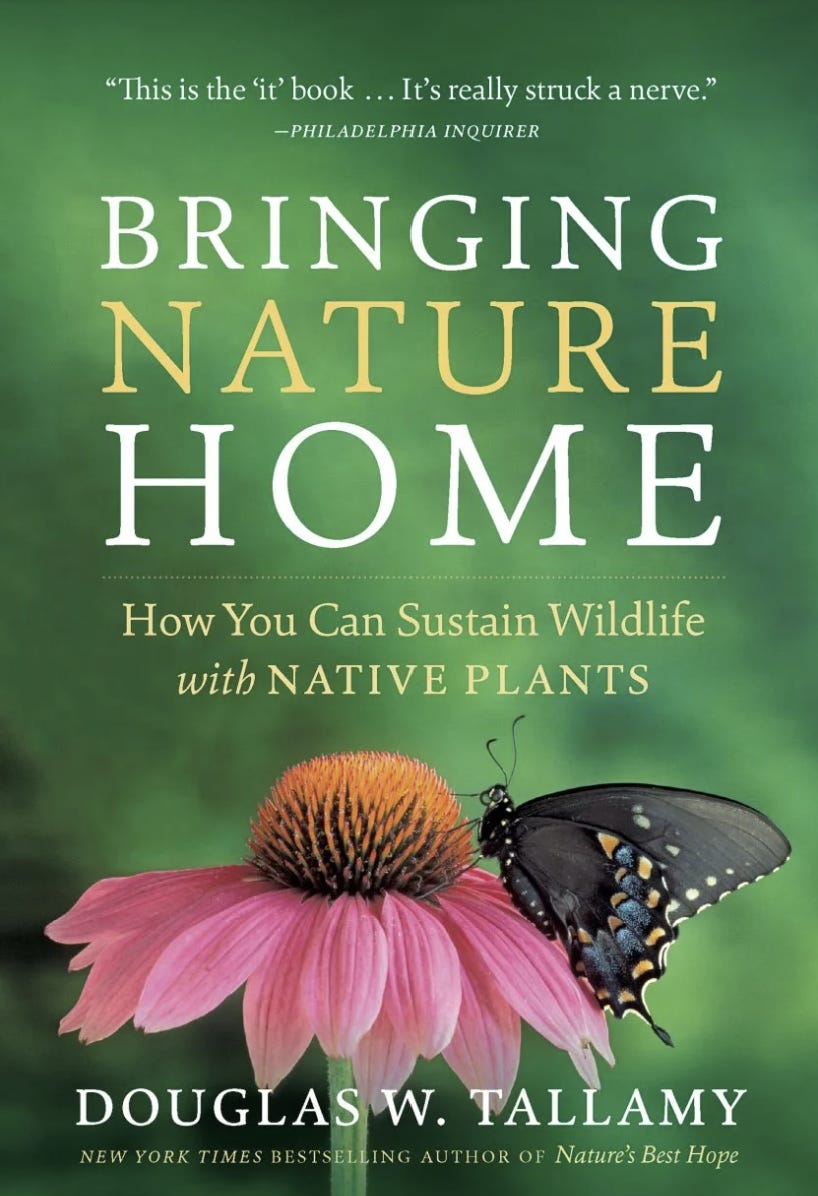
In Bringing Nature Home, I learned that all the investment we make to develop and maintain the perfect lawn is destroying the local ecosystem. Pesticides and herbicides don’t only kill “bad” insects, they kill pollinators and other beneficial insects, too. In many regions, maintaining thirsty lawns requires water that could be conserved.
Here are five lessons I learned from this book:
Native plants are the foundation of local ecosystems
Tallamy argues that native plants evolved alongside native insects, birds, and other wildlife. They provide the food and shelter those species need in ways many exotic ornamentals cannot.Backyards matter more than people think
Conservation is not only about national parks or wilderness areas. Millions of private yards, gardens, and suburban landscapes together form enormous potential habitat corridors.Insects are essential, not just pests
Caterpillars, bees, moths, and countless insects are the base of the food web. Birds especially depend on insects to raise their young. Eliminating bugs harms the larger ecosystem.Small choices create large environmental change
Replacing lawn space with native shrubs, trees, and flowers, reducing pesticides, and planting even a few key species can significantly increase biodiversity over time.Homeowners have the responsibility and power to make a difference
Tallamy’s central message is hopeful: ordinary people can become active stewards of nature. You do not need to own a forest preserve to help restore ecological balance—you can begin at home.
What is a native plant?
A native plant is defined as a species that naturally occurred in your state or ecological region before large-scale modern human introduction. Native plants usually have long relationships with local pollinators, insects, birds, soils, and climate patterns. Those relationships often make them more ecologically valuable than introduced ornamentals.
A plant from China or Japan is, by definition, not native to North America. A plant found in the American desert is typically not native to the East Coast. In fact, something native to one side of your state might not be native to the side you live in. What’s most important is to learn about the ecoregion in which you live. Here are some of the characteristics that define an ecoregion:
Climate – temperature, rainfall, humidity, frost, and seasons.
Soils – fertility, drainage, acidity, texture, and organic matter.
Landforms – mountains, plains, coasts, valleys, and underlying geology.
Water systems – streams, wetlands, groundwater, flooding, and watersheds.
Plant communities – forests, prairies, marshes, savannas, bogs, and shrublands.
Wildlife communities – animals and insects adapted to those habitats.
Natural processes – fire, drought, storms, erosion, and ecological change over time.
Just because you see a native wildflower on a hike in the mountains, doesn’t mean it can or should survive in the coastal area where you live. The trick is learning your ecoregion’s characteristics and planting based on that.
Three steps you can take right now
How do we put these lessons into practice? Here are three important steps to get started.
Step 1
The first step is to make an inventory of the plants in your yard. If you know what a plant is called, even the common name, you can look it up at the North Carolina Extension Gardener Plant Toolbox, LadyBird Johnson Wildflower Center Native Plants Database, or the Missouri Botanical Garden Plant Finder to find out more about it.
However, these resources will not necessarily tell you if a plant is native or nonnative to your ecoregion. For that, you’ll need to consult a local resource. A web search for your state’s native plant organization will probably help you with that.
To identify plants I don’t know, I use Picture This. It’s an app known for accuracy and fast identification. I use it every time I’m in the garden to remind myself what I’ve planted and identify volunteers to determine if I should leave or pull them. In addition, Picture This provides detailed care information, disease diagnosis, origin, and toxicity warnings. Here are some other resources, including some free, options you might consider: PlantNet, LeafSnap, Plantora, and Plant.id.
Step 2
After you know what you’re dealing with in your yard, develop a plan to remove nonnative invasive plants. Start with the most invasive or with the easiest to remove. However, be sure to research how to remove them. Some trees, such as Tree of Heaven (Ailanthus altissima), which should be called Tree of Hell, loves to be cut down. For your effort, it can trigger aggressive root suckering and many new shoots. So, to avoid making the problem worse, find out before you cut!
Step 3
Incorporate native plants into your garden/yard planning:
Plant native trees, shrubs, and flowers
This is the single biggest step. Native plants support native caterpillars, pollinators, and birds in ways most imported ornamentals do not. If space is limited, start with one native tree or replace part of a flower bed. Even one native plant in a pot on your apartment’s patio can have impact. According to Tallamy, planting a native oak, willow, cherry, or other highly productive native tree is a great first step because these trees support the most life. If you’re not ready to plant a tree, identify one or two flowering native perennials (plants that come back every year) and plant them in groups of three or five in a small garden area. I promise you, when they appear on their own next year, they will inspire you to learn more. Take your time. You don’t have to do it all at once.Shrink the lawn and diversify the yard
Although you may love it, traditional turf grass offers little wildlife value. Convert portions of lawn into planting beds, meadows, layered borders, or small habitat zones. You don’t have to get rid of all of it, even a modest reduction in grass can make a real difference.Stop routine pesticide use
Insecticides, herbicides, and broad chemical treatments often kill the very organisms that keep nature functioning. Tolerate some leaf damage, hand-pull weeds when possible, and use targeted treatment only when truly necessary.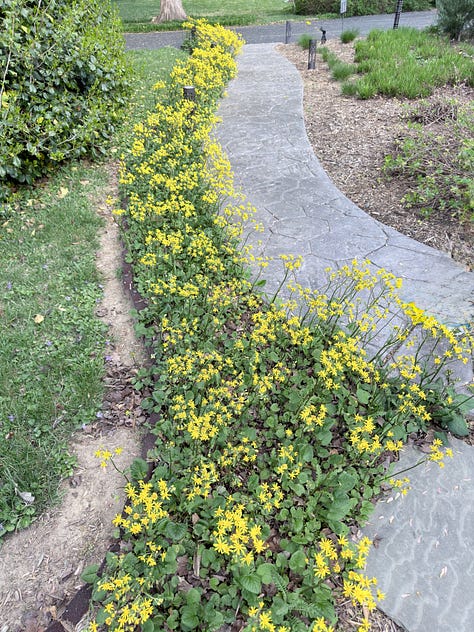
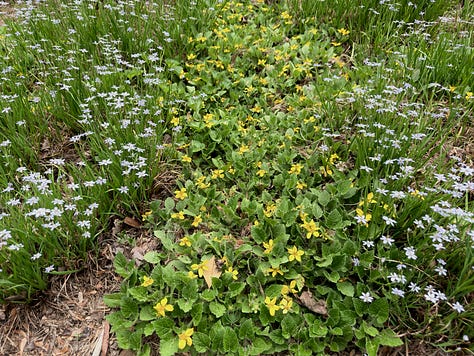
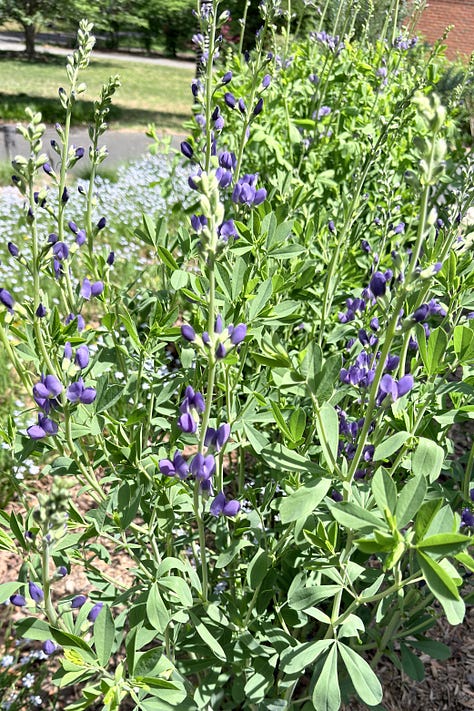
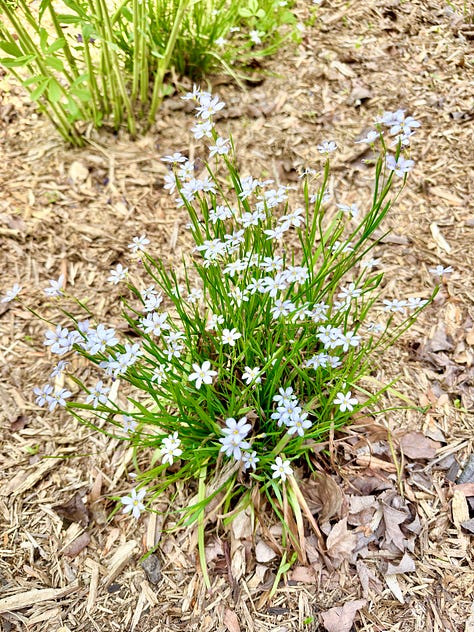
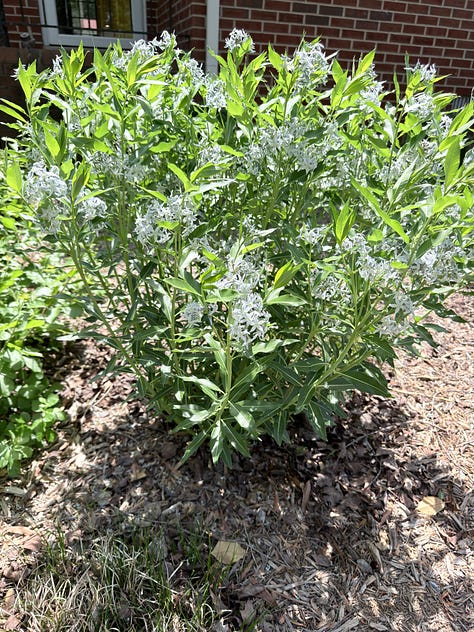
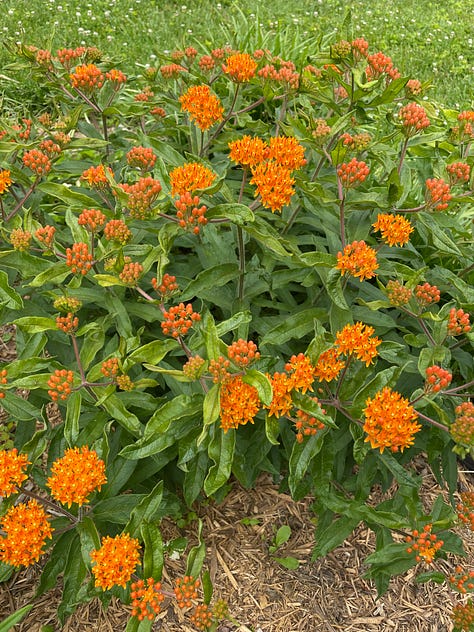
A few of my native plants from (L to R) Top: Golden Ragwort (Packera aurea), Green and Gold (Chrysogonum virginianum), Blue False Indigo (Baptisia australis), Bottom: Blue-eyed Grass (Sisyrinchium angustifolium), Eastern Bluestar (Amsonia tabernaemontana), Butterfly Weed (Asclepias tuberosa)


Don’t worry about perfection. Make progress instead.
I’ll be the first to admit that becoming a native gardener is not an easy task. Garden centers often make native plants surprisingly hard to identify. Read tags carefully and double-check your native plant sources to make sure you’re getting a native plant.
Especially in the early days, you’ll probably have to pull out as many invasive plants, if not even more, than the natives you plant. Don’t give up!
Even after six years of being intentional about native planting, I still have nonnative and even some invasive plants in my yard. It’s a slow process that requires study, dedication, and hard work to learn. I guarantee you, you will make mistakes, and you might encounter resistance from your family or even an HOA.
Family members might resist cutting down a favorite Bradford Pear (also called Callery pear). “But it’s so pretty in the spring!” they might exclaim. And yes, that might be true. But their flowers don’t support native insects nearly as much as native trees do. In addition, they spread with abandon and displace native wildflowers, shrubs, and young trees. And those are only a couple of the issues with nonnative, invasive trees like Bradford Pears.
Homeowners Associations (HOAs) often have strict rules about the look of your yard and expect well-trimmed grass and limited vegetation. More homeowners, however, are fighting back and, as a result, some of the rules have started to change. Native gardens don’t have to be chaotic and messy. Through careful planning, you can incorporate native plants that enhance, rather than detract, from the beauty of your home. Just be planful and advocate for native plants.
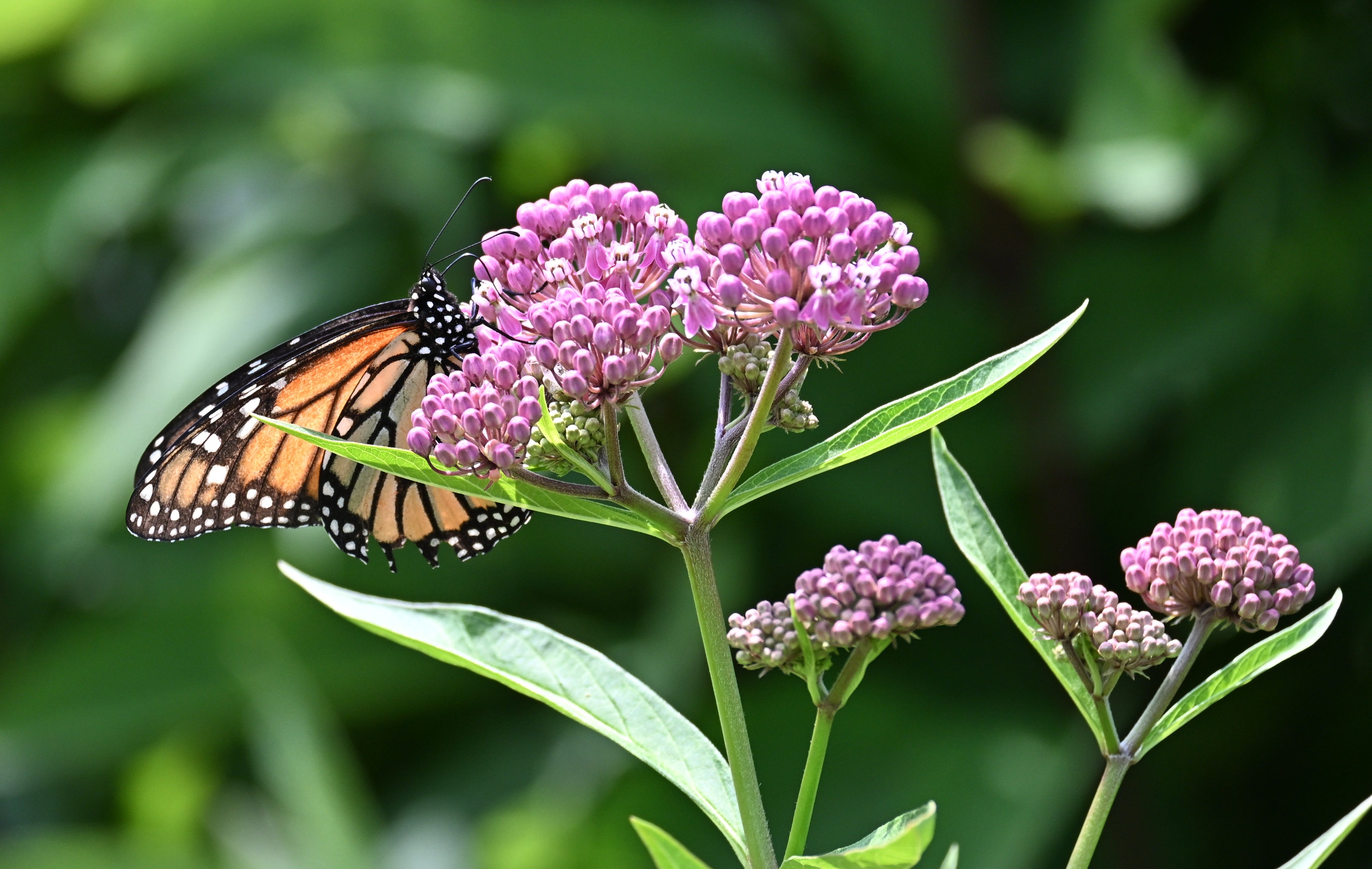
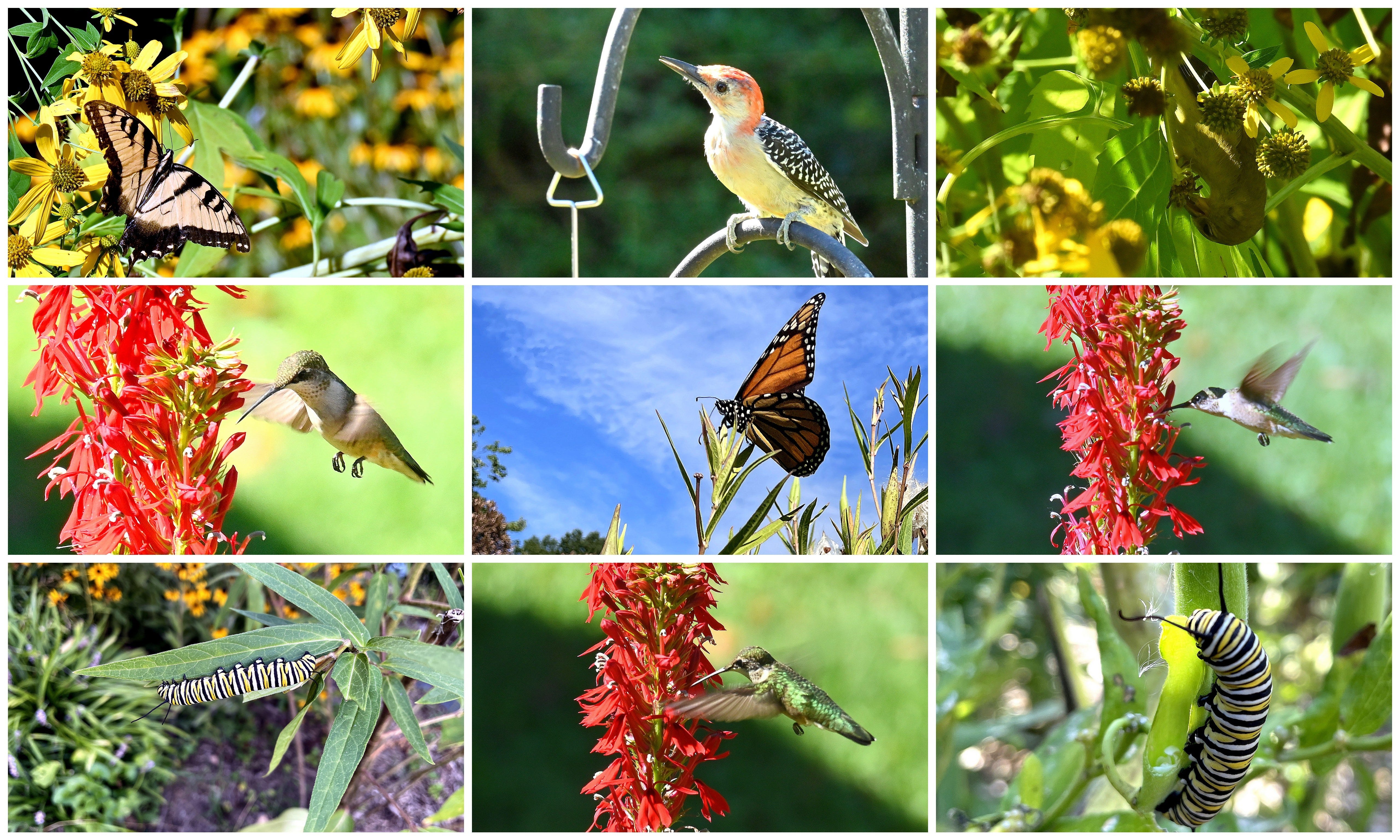
Whether it’s true or not in every case, the old adage is that when you plant natives, the first year they sleep, the second year they creep, and the third year they leap. The moral of the story is that restoring your ecosystem takes time and patience. But I can guarantee that the first time you see a Monarch butterfly land on the butterfly weed you planted, it will be all worthwhile.
Put yourself on the map
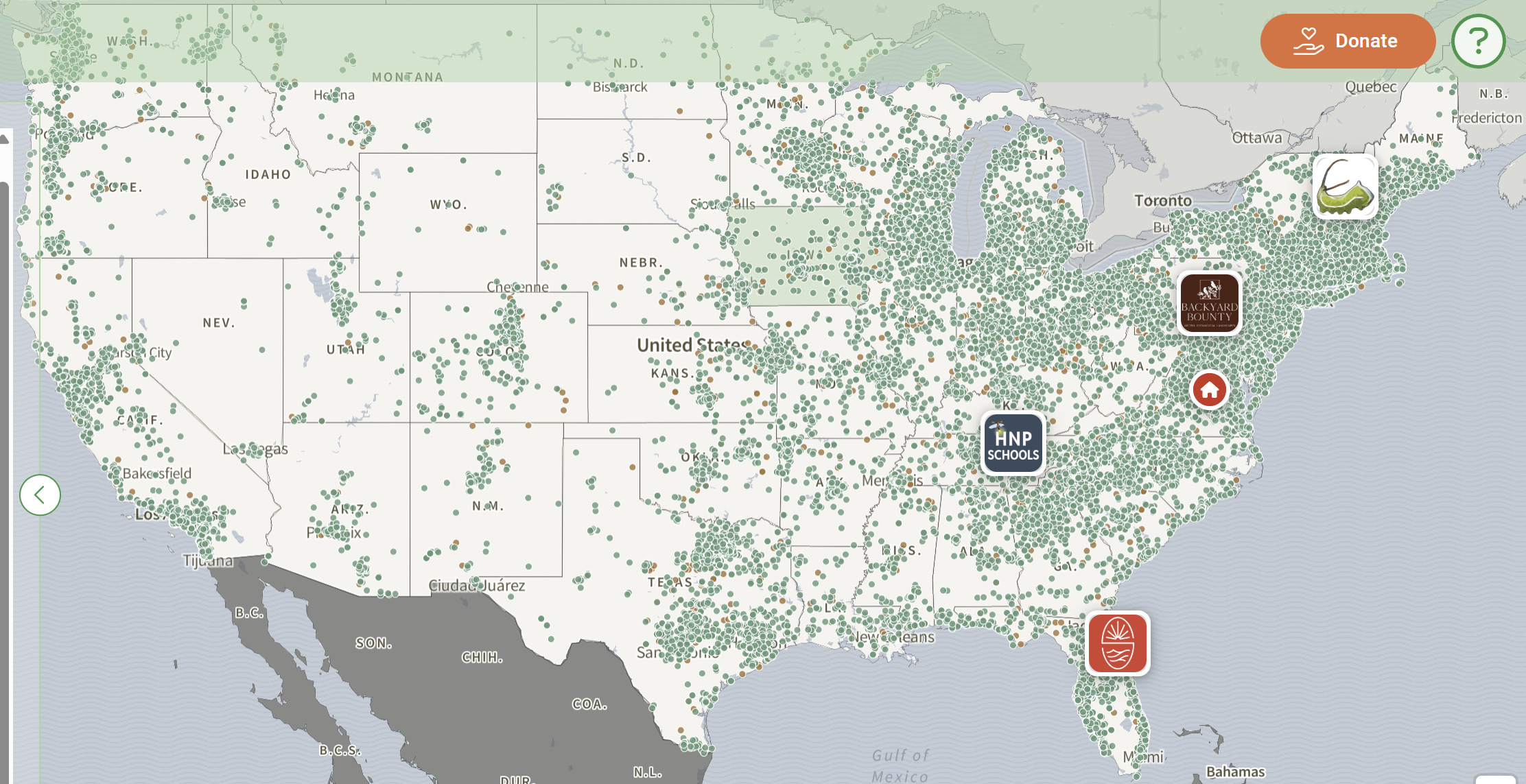
After you’ve converted even a small plot of land to natives, I encourage you to include your accomplishment on Doug Tallamy’s HomeGrown National Park Biodiversity Map. It’s a nationwide effort to showcase your commitment to restoring nature and inspire others to take action. By adding your garden to the map, you contribute to a growing movement that regenerates biodiversity and strengthens local ecosystems. Together, our individual efforts create meaningful change!
And before I go, if you haven’t seen this popular humorous anecdote (author unknown), I encourage you to read it and then pass it around. It’s a great way to inject some humor in what might feel like an arduous task.
Although Wendy might still not love working in our gardens, she loves the native habitat we’ve created. With the exception of the Monarch caterpillars (I had to go into the garden to get those), these photos were all taken from our sunroom window within about 15 minutes of each other on one September morning. What an incredible gift for all our labors!
Start with one tree, one bed, or one pot. Nature knows what to do next.
Yours in peace,
Annette
Love this!
I hope more people read this article and put it to use. I live in a rented apartment and unfortunately have nowhere to plant anything. But I'm a great fan of native plantings and permaculture.